Scaling a consumer crypto wallet into a reusable WaaS foundation
Product Designer
UI/UX, Design System
Spatium
Feb 2022 – Sep 2023
iOS, Android
Collaboration
Project Manager
Developers
Design Lead
Designer
Mentored an intern
context
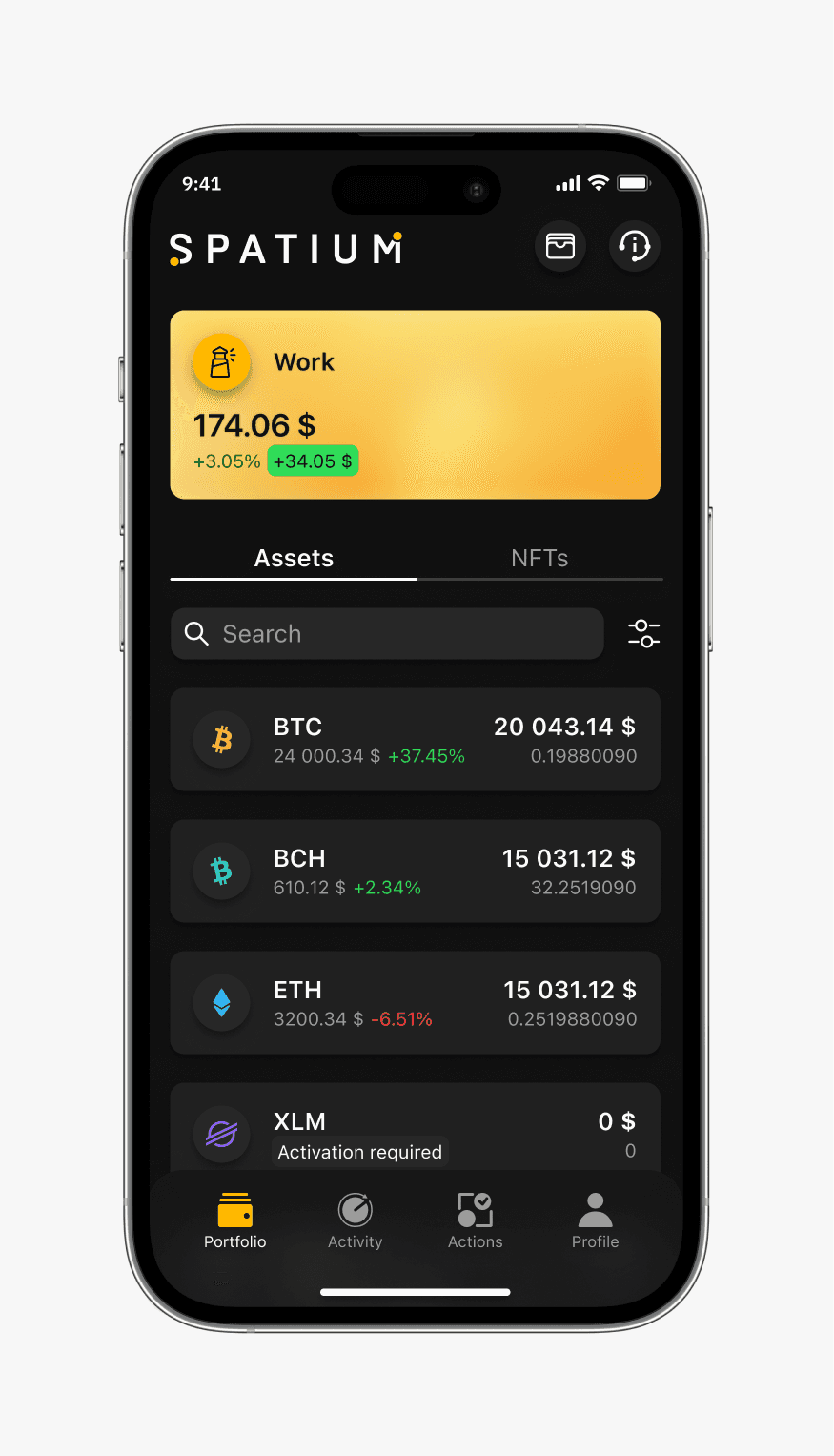
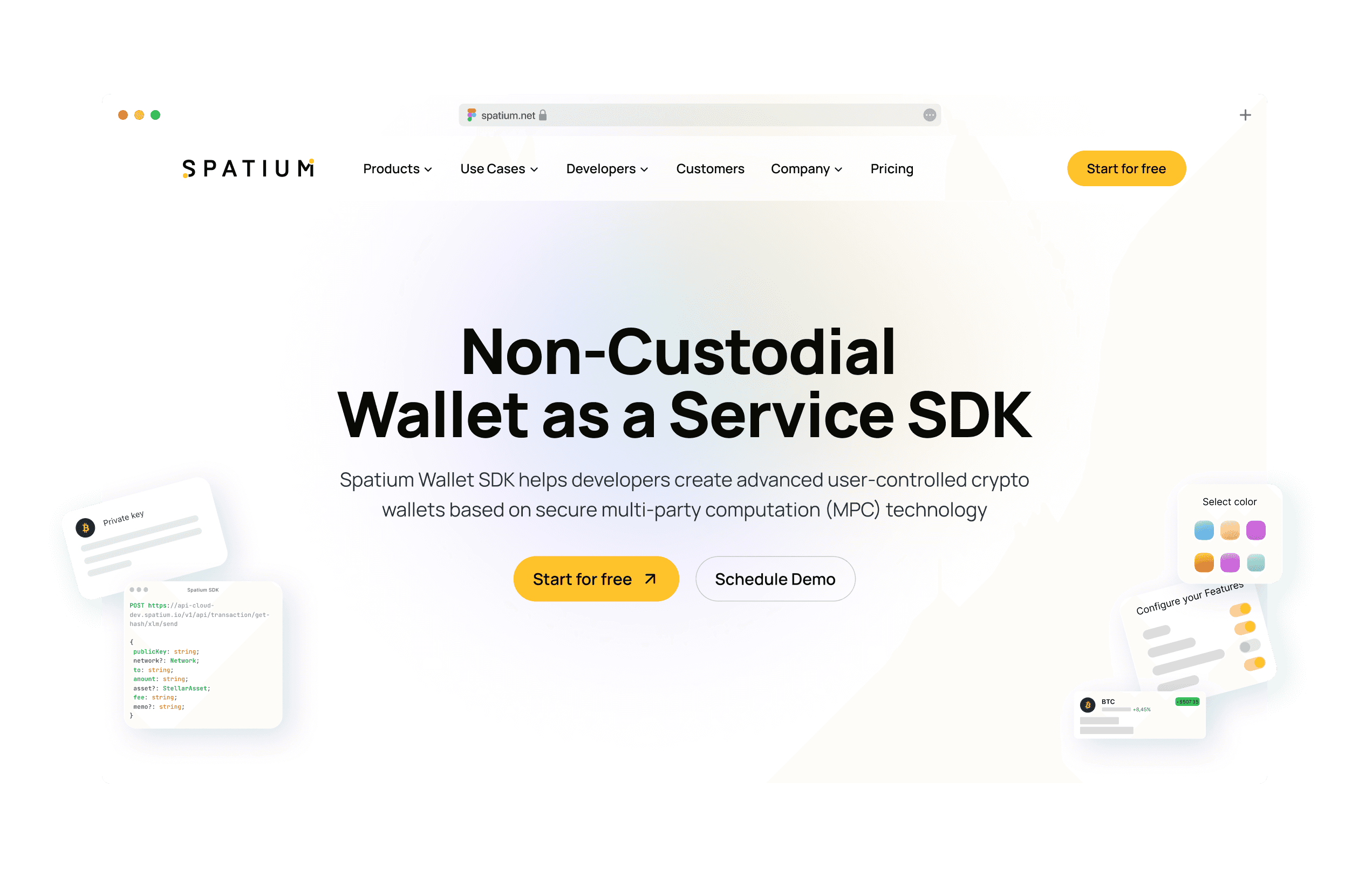
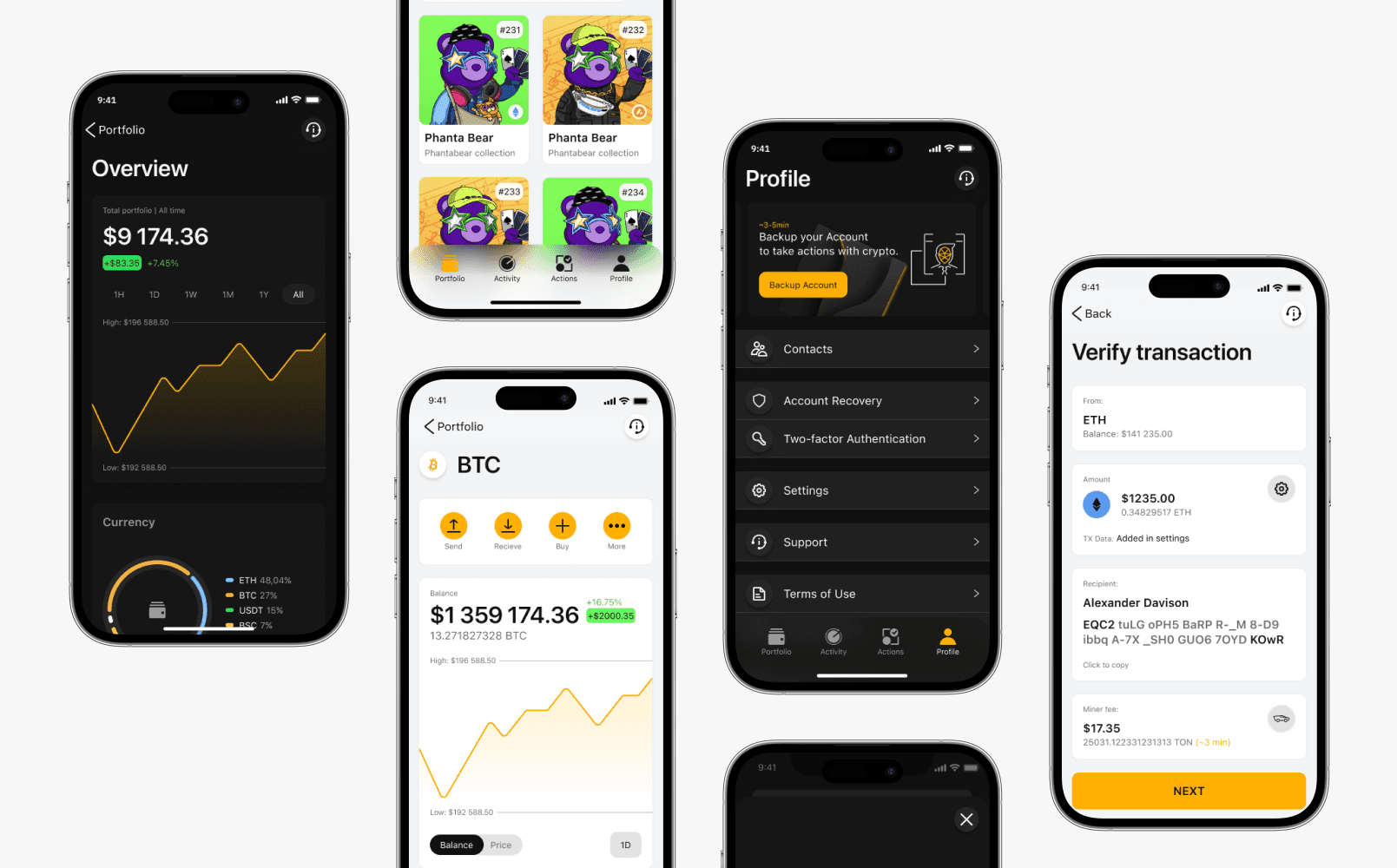
Spatium builds both a consumer crypto wallet for everyday users and a wallet infrastructure stack (WaaS) other companies can build on.
From 2022–2023, I helped scale the product through three shipped initiatives: a dev-aligned design system, a simplified Activity + Portfolio experience for multi-currency users, and a WalletConnect v2 migration that increased usage by 25%.
Overview
As Spatium grew, the product had to meet two competing needs:
Everyday users needed clarity, confidence, and low-friction interactions
WaaS scaling required consistent patterns, reusable components, and fast, predictable delivery
That created one core goal: make the wallet feel simpler to use, while making the product easier to build and scale.
KEY CHALLENGES
UI kit existed but wasn’t consistently applied or synced with development
Core screens (Activity + Portfolio) were dense and hard to scan, especially after multi-currency support
WalletConnect v2 required a new flow and updated screens
Deep dive 1
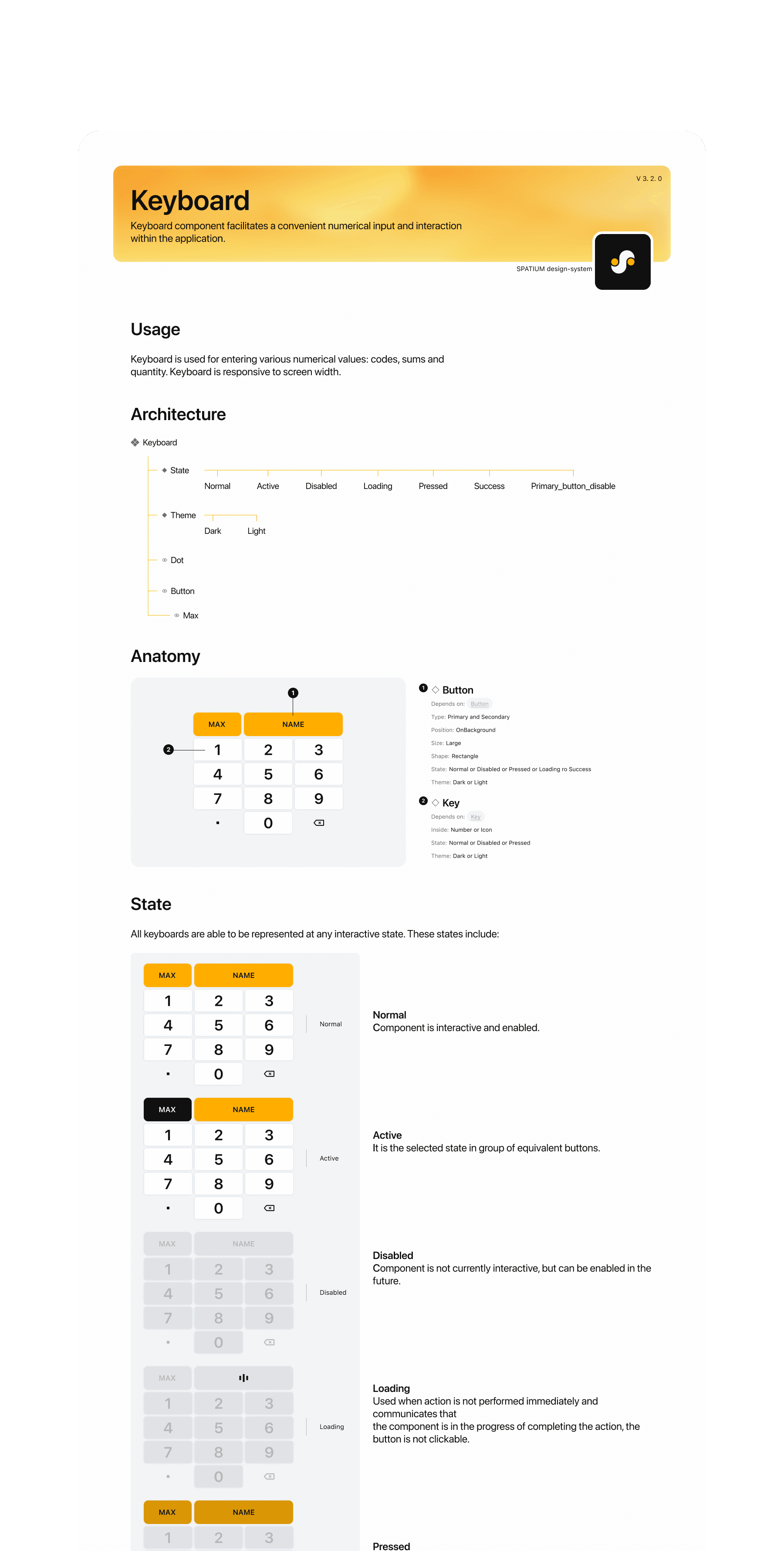
Design system
problem
UI kit existed, but patterns weren’t consistent and components didn’t map cleanly to engineering implementation
What I did
With another designer and engineers, I:
Audited components for inconsistency and duplication
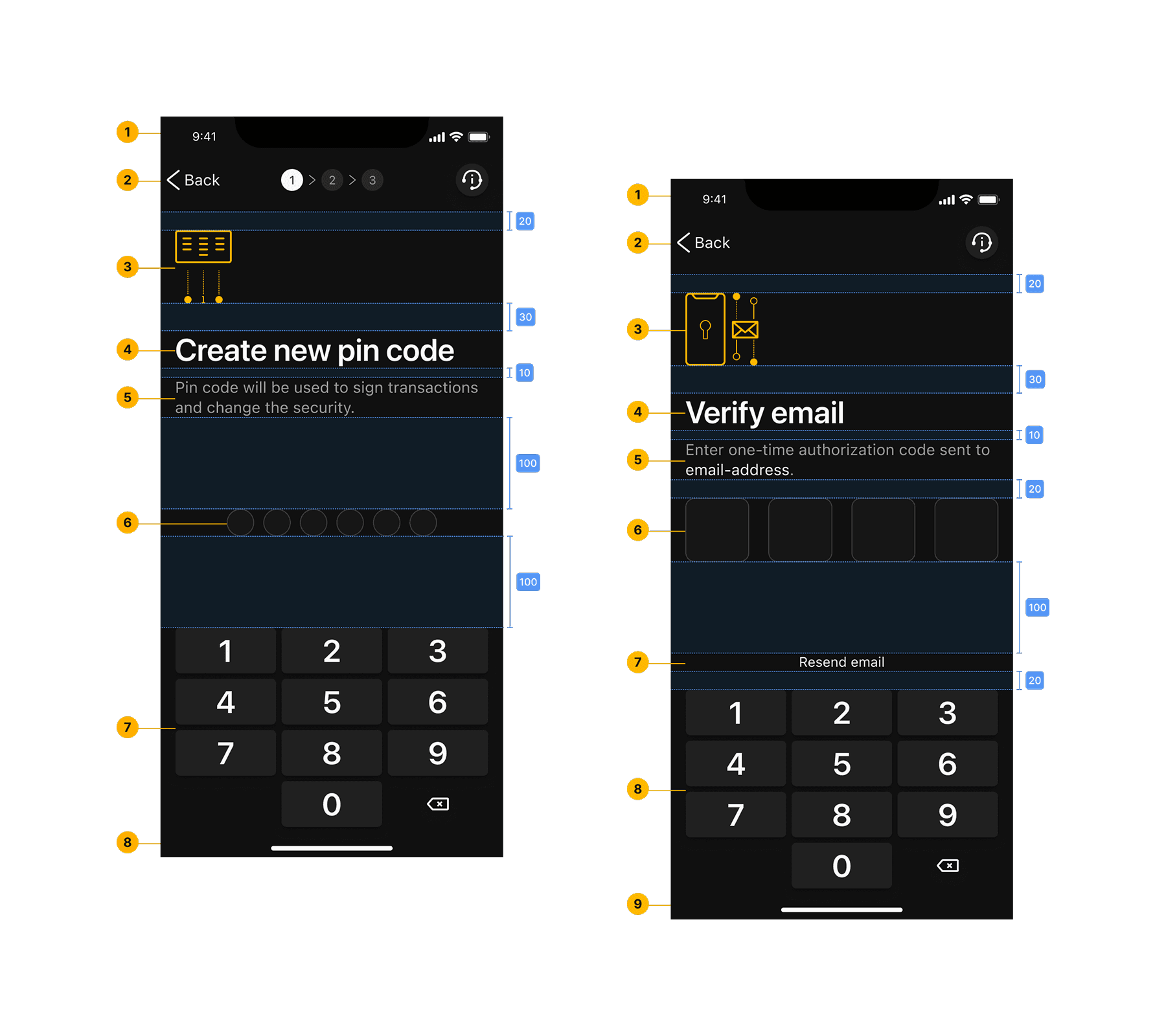
Rebuilt components to match dev constraints and real product usage
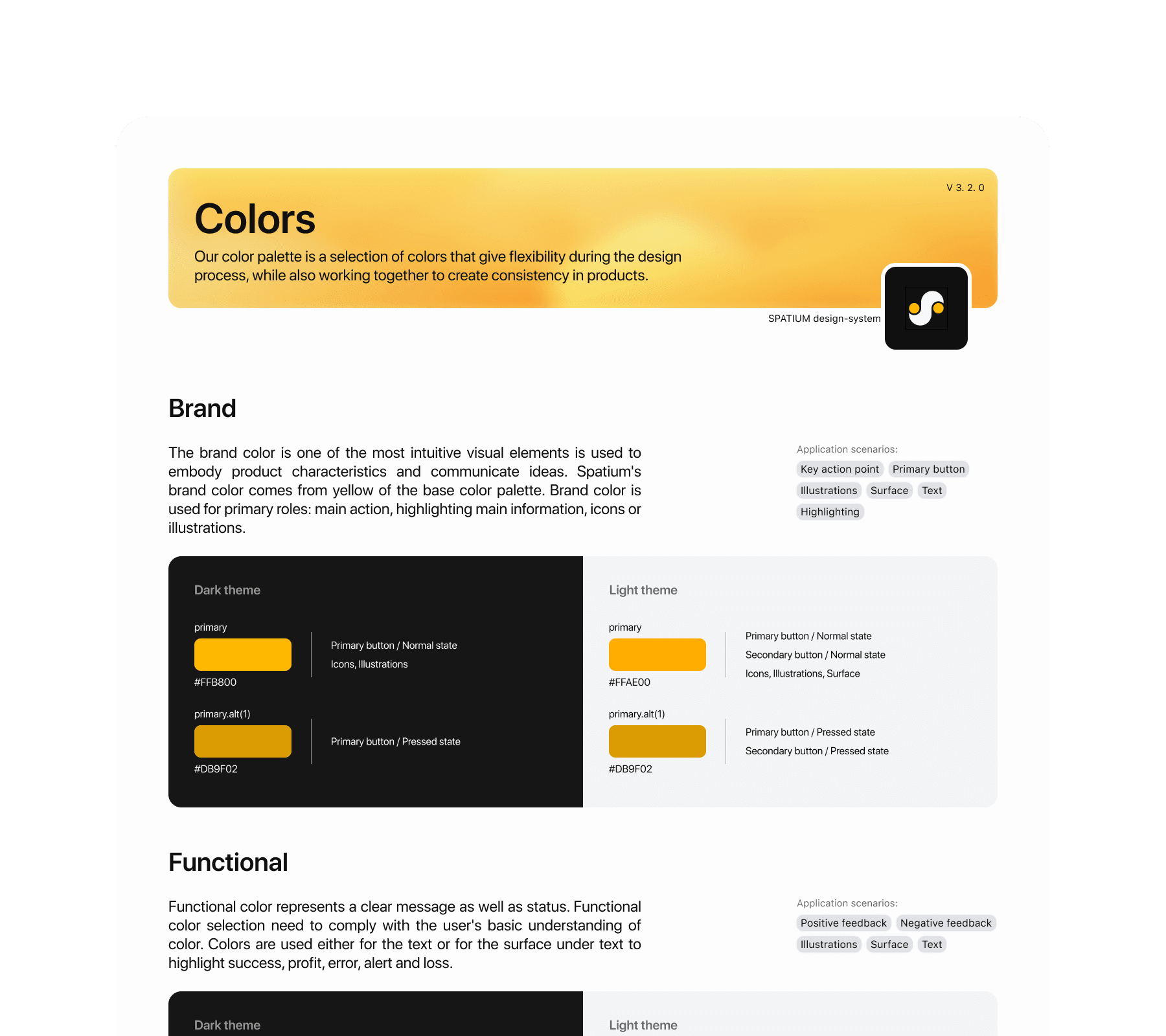
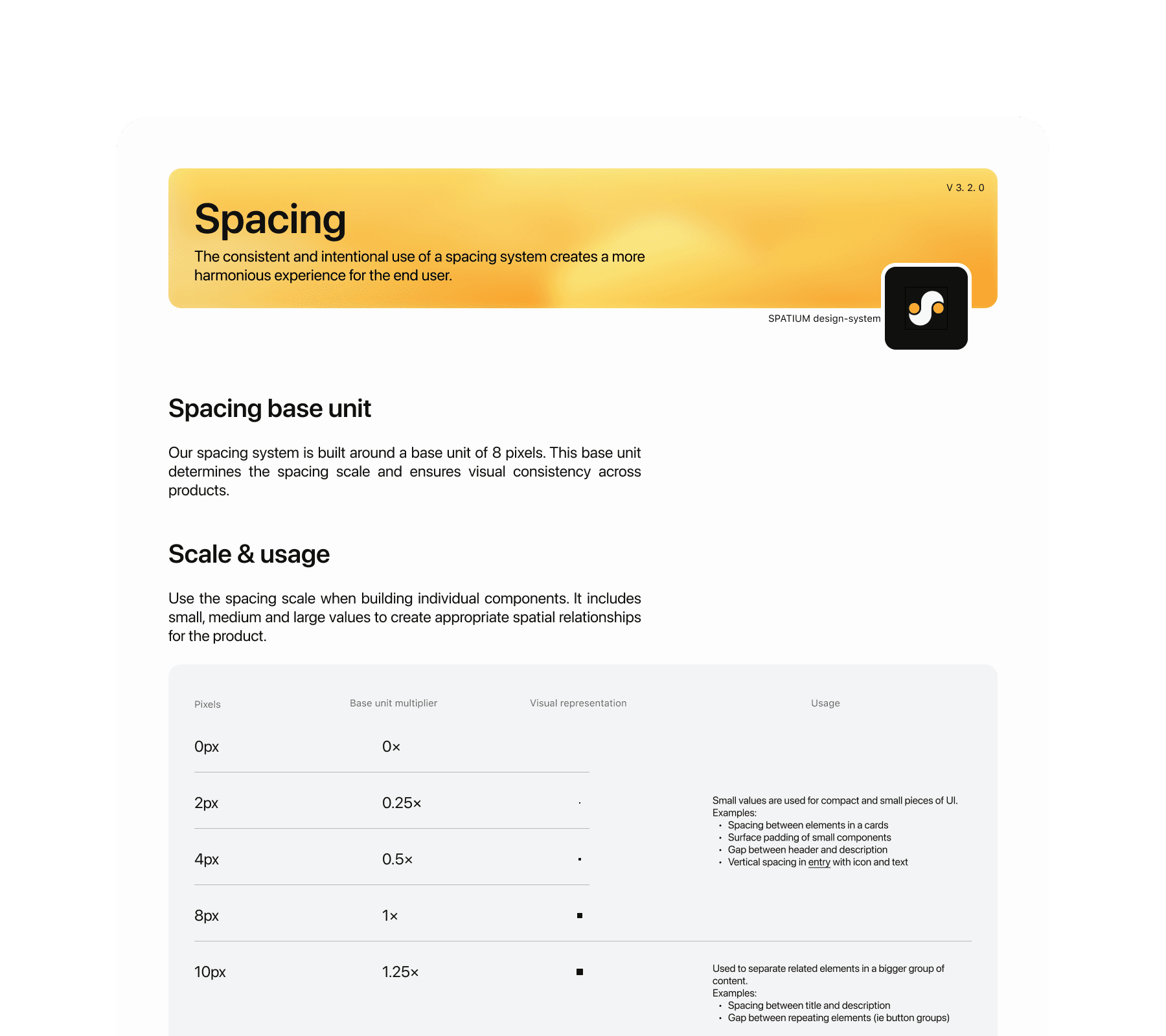
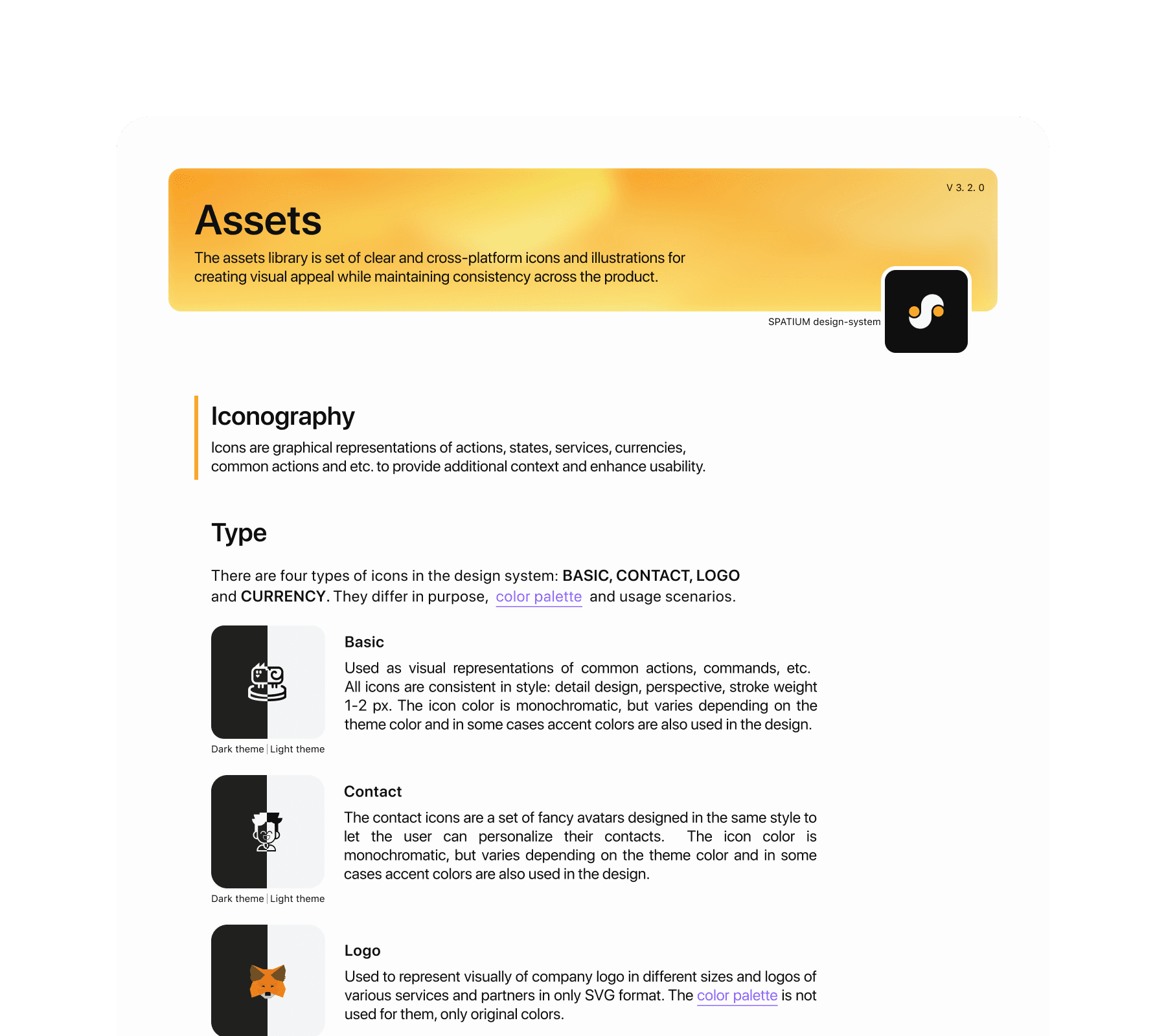
Structured the system into 3 layers:
Styles: colours, typography, spacing, elevation, visual effects
Assets: iconography, illustrations
Components: buttons, inputs, lists, tags, messages, modals, etc.
Wrote usage guidelines and principles so designers and engineers could adopt and contribute
RESULTS
30+ components / 100+ variants
actively used by the team
Reduced handoff time
through clearer specs and documentation
Less time spent coding
because of increased reuse across features
Less back-and-forth during QA
due to consistent patterns
Deep dive 2
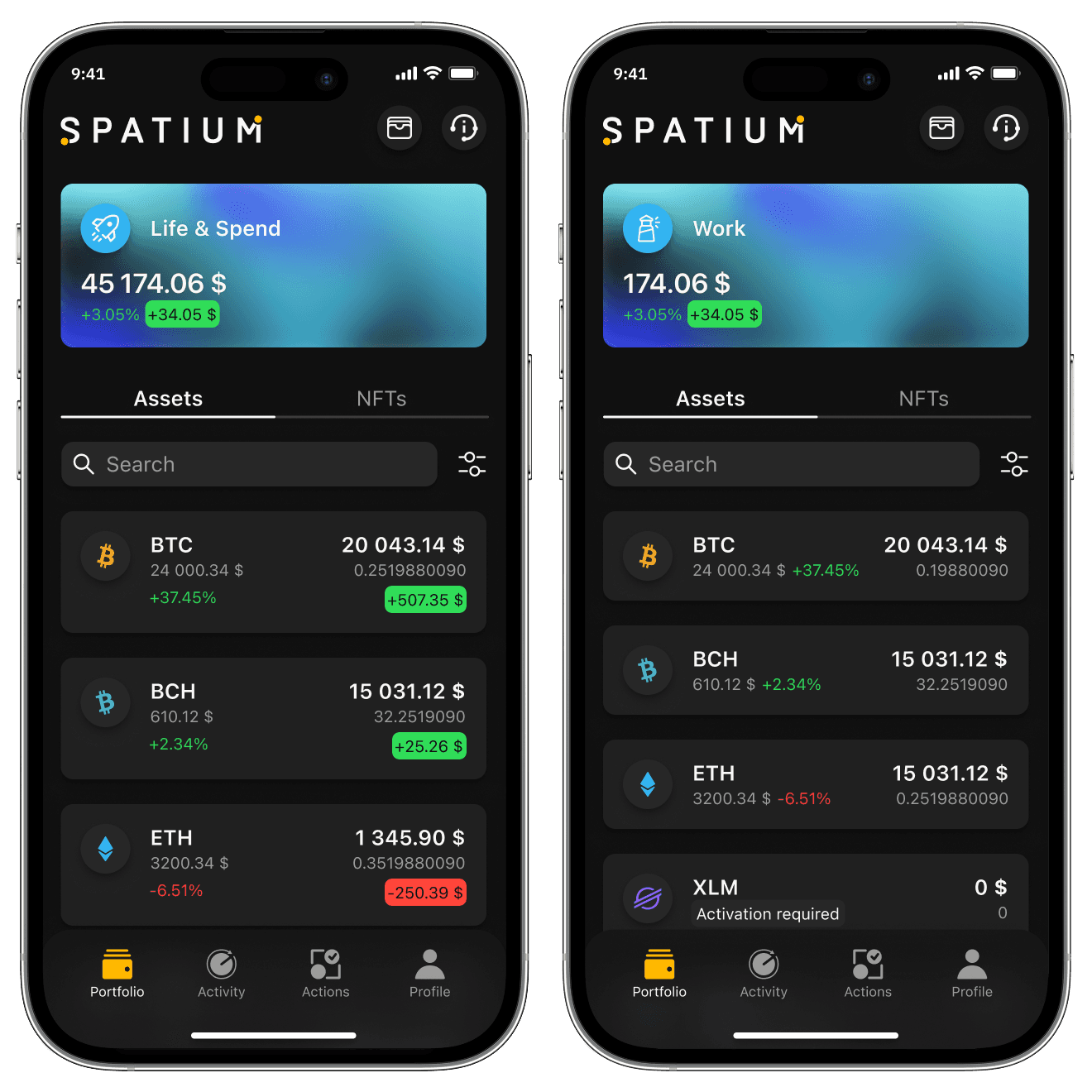
Activity and portfolio cards overhaul
problem
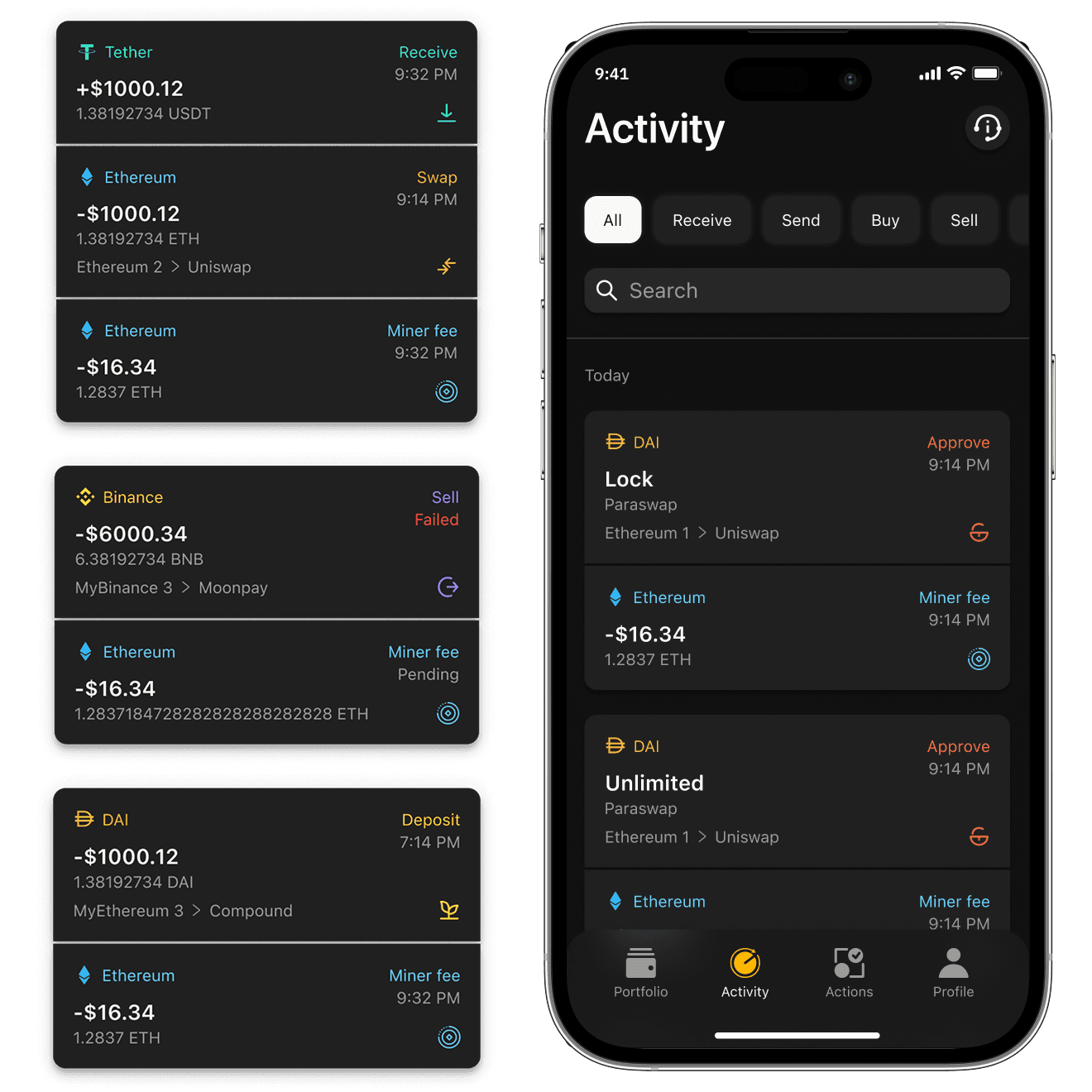
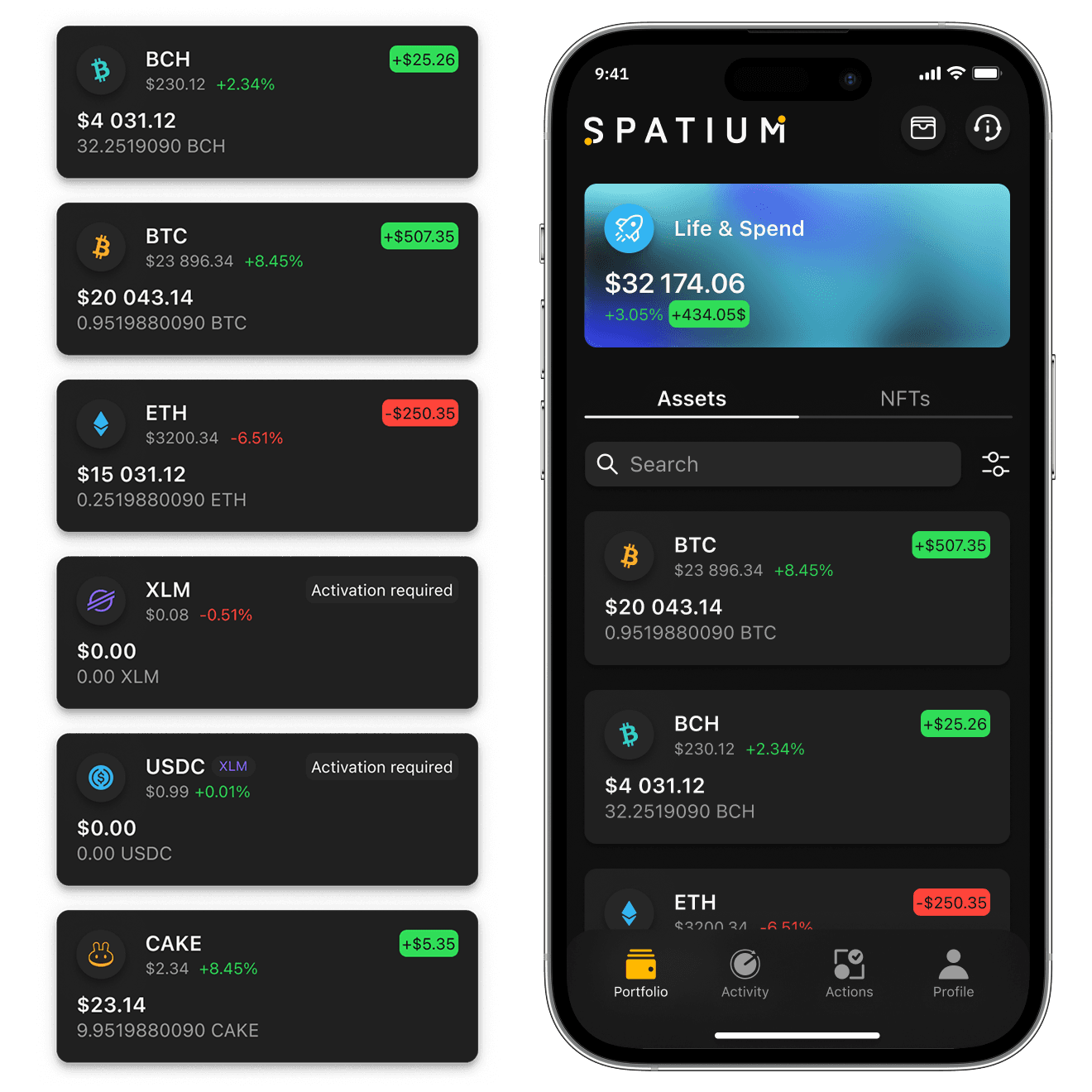
The Activity screen is where users monitor transactions and security updates. Portfolio shows multi-currency balances. These screens are high-frequency and must be scannable. These screens shape user trust—people come here to quickly confirm what happened and whether everything is safe.
Before the redesign:
Each activity could take ~30% of the screen, making browsing slow
Cards contained almost all details even though a tap opens a detailed view
Multi-currency increased complexity, but the layout didn’t scale cleanly
what I changed and why
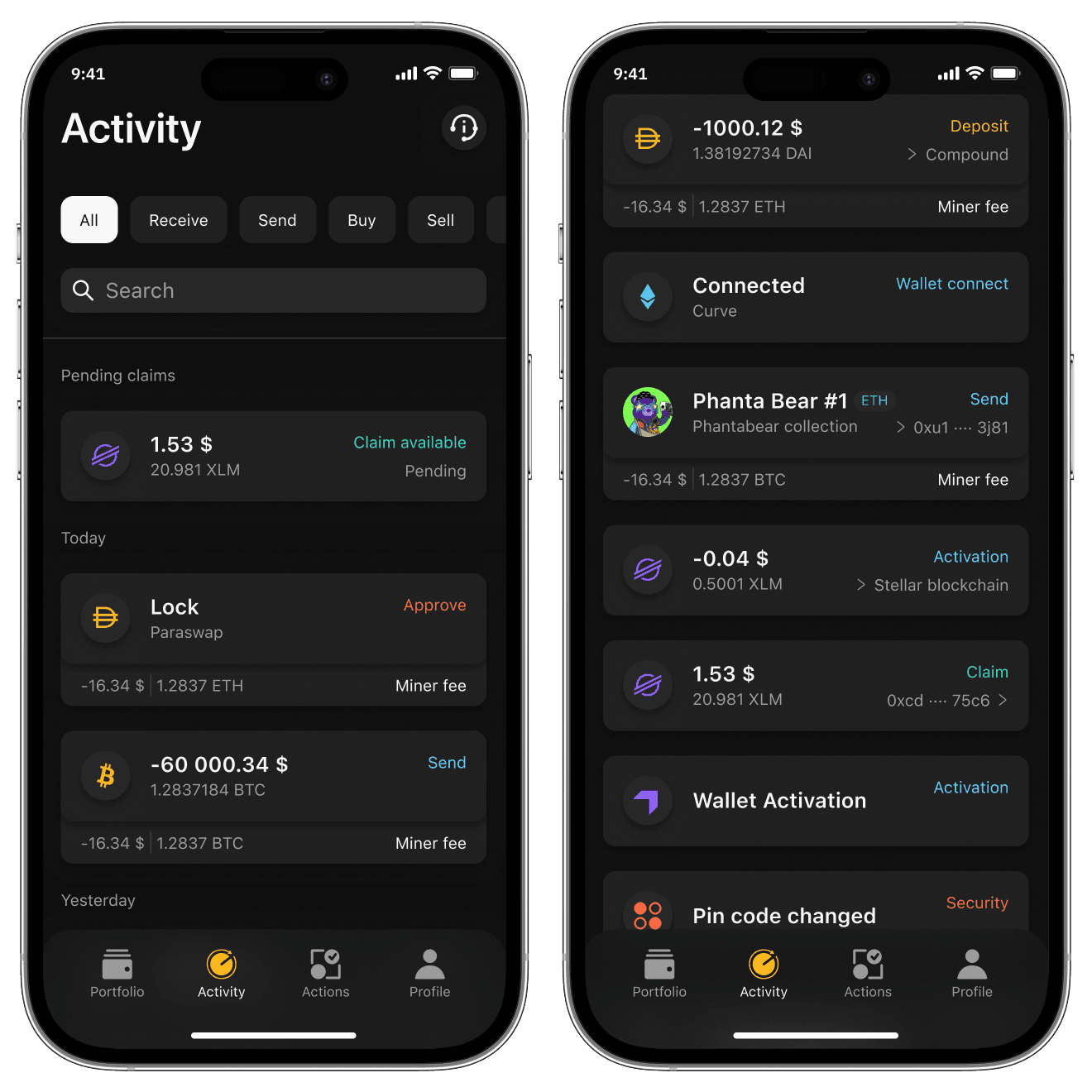
Designed for scannability: keep only what helps users identify “what happened?”
Grouped items by date (removed repeated time per card)
Reduced secondary operations (fees, swap, miner fee) so the main operation reads first
Kept color + naming for activity types, removed elements that didn’t improve clarity (e.g., icons)
After multi-currency support, emphasized operation paths rather than repeating information per wallet
Updated portfolio card information architecture to improve clarity and vertical efficiency
Outcomes
Faster scanning, less scrolling
With more items visible per screen
Reduced “hunt time”
by prioritising the primary action and simplifying hierarchy
Better scalability
for multi-currency complexity
Kept patterns consistent
across core screens (Activity + Portfolio)
Before
After
Before
After
Deep dive 3
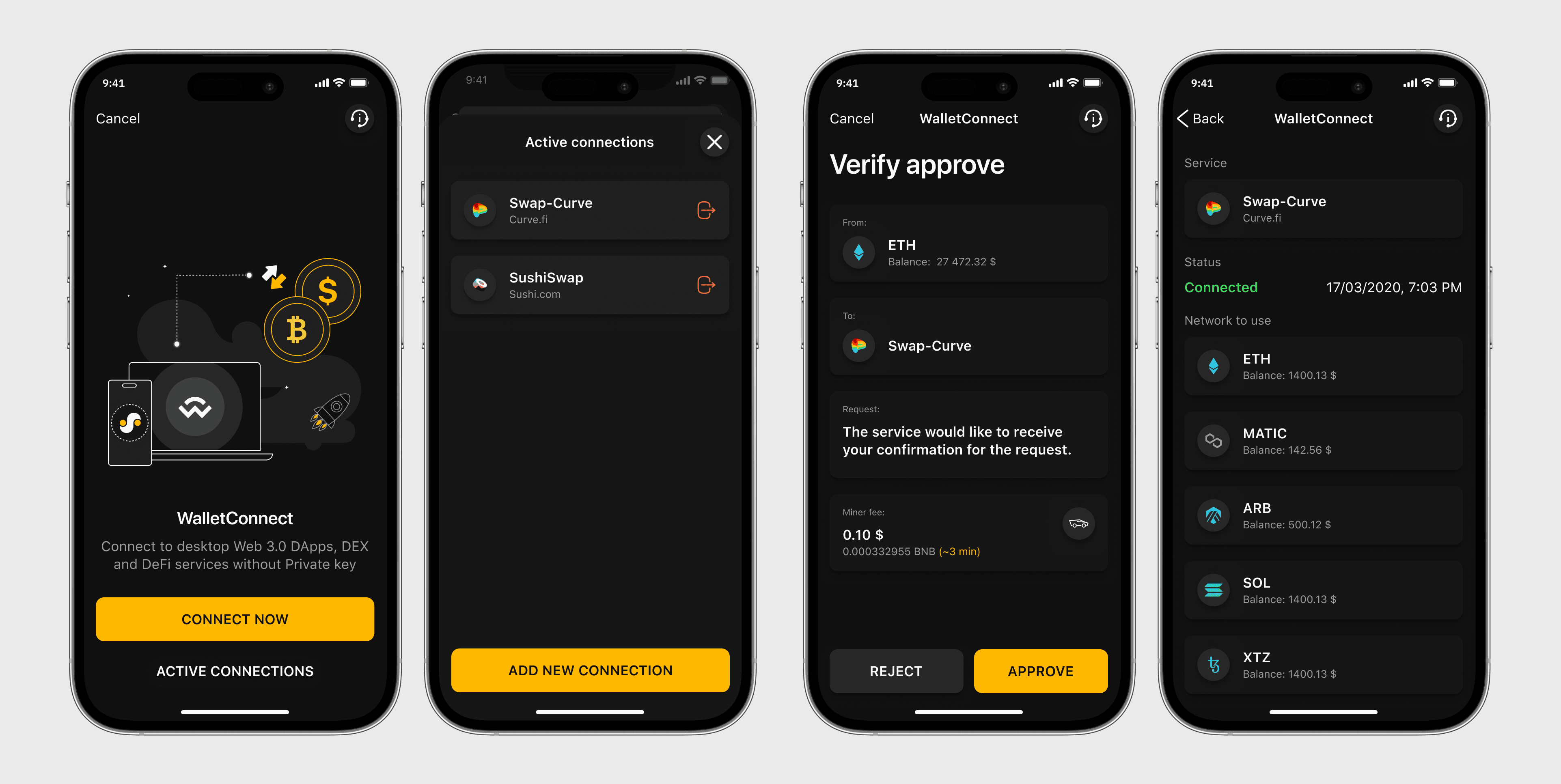
WalletConnect v2
Situation
WalletConnect v2 shipped with flow changes, requiring an in-app migration from v1
What I did
Reviewed v2 changes vs v1 and audited documentation
Mapped the new flow with PM (connect → permissions → interaction)
Designed updated screens + states aligned with wallet patterns and system components
Designed states to keep the migration seamless for existing users
Result
WalletConnect v2 shipped (cleaner, smoother flow)
Updated the connection experience and UI states to make pairing and usage feel more straightforward
WalletConnect adoption up +25% after release
Usage increased post-launch, indicating improved discoverability and a lower-friction connection flow